
Book Editing

What is Book Proofreading
Most authors confuse proofreading with editing. They use the words interchangeably and assume any thorough read-through counts as both. The two are different stages with

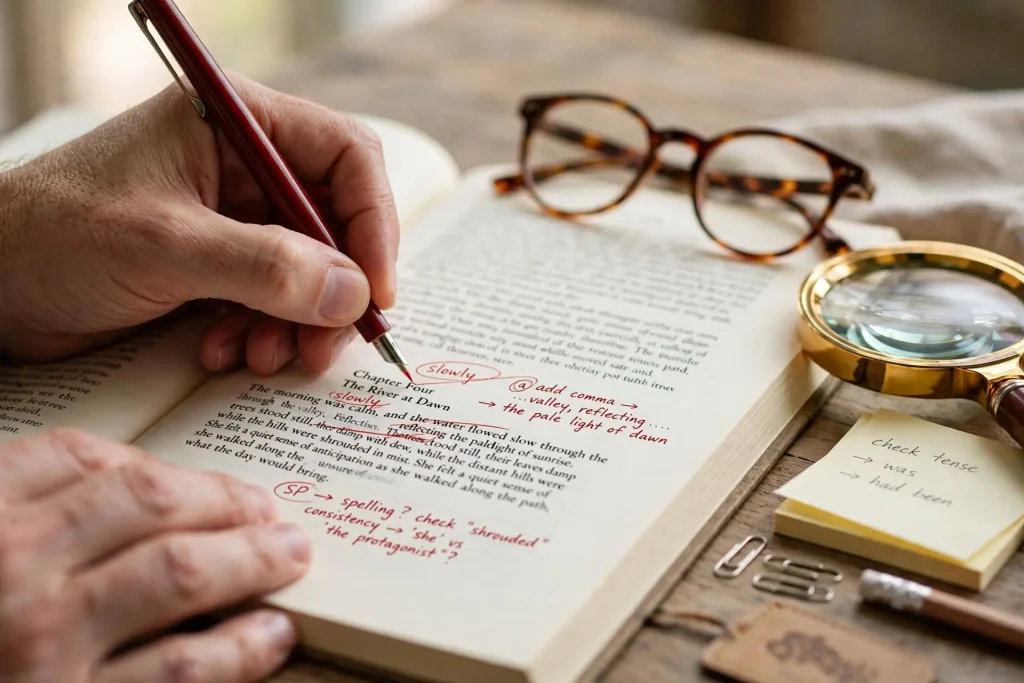
Most authors confuse proofreading with editing. They use the words interchangeably and assume any thorough read-through counts as both. The two are different stages with

Most authors who consider skipping editing focus on what they’ll save in money. The framework deserves the opposite focus. What will be lost by skipping

Most fiction problems trace back to dialogue. The action might be exciting, the descriptions might be polished, but if the dialogue feels stilted, characters speak

Most authors approach editing without recognizing the patterns of mistakes that consistently produce inferior outcomes. They rush the process. They skip stages. They hire wrong

Most editing focuses on grammar, voice, structure, or other specific concerns. Clarity editing is its own focus that cuts across these areas to address one

Most authors approach editing without systematic process. They edit their manuscripts when they think to, addressing whatever issues catch their attention, without working through a

Most authors who hire editors think first about copy editing. The grammar fixes. The polishing of sentences. The catching of typos. The reality is that
Writing a scholarly book takes years. The research, the drafting, the rewrites, and by the time the manuscript is done, most authors are too close
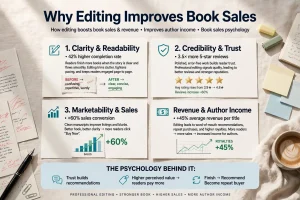
Most discussions of editing focus on the decision to edit at all. The more important question is why editing produces commercial outcomes. Authors who know
The most common surprise authors face when they finish their first manuscript is how long the editing process actually takes. Authors expecting to publish 3